
Painfully Honest
Ingredients: A generous helping of evidence-informed writing on pain, bodies and the wellness world - a dash of swearing, a sprinkling of sarcasm, and a lot of heart.
Free from: artificial sweeteners, miracle cures, and wellness waffle.
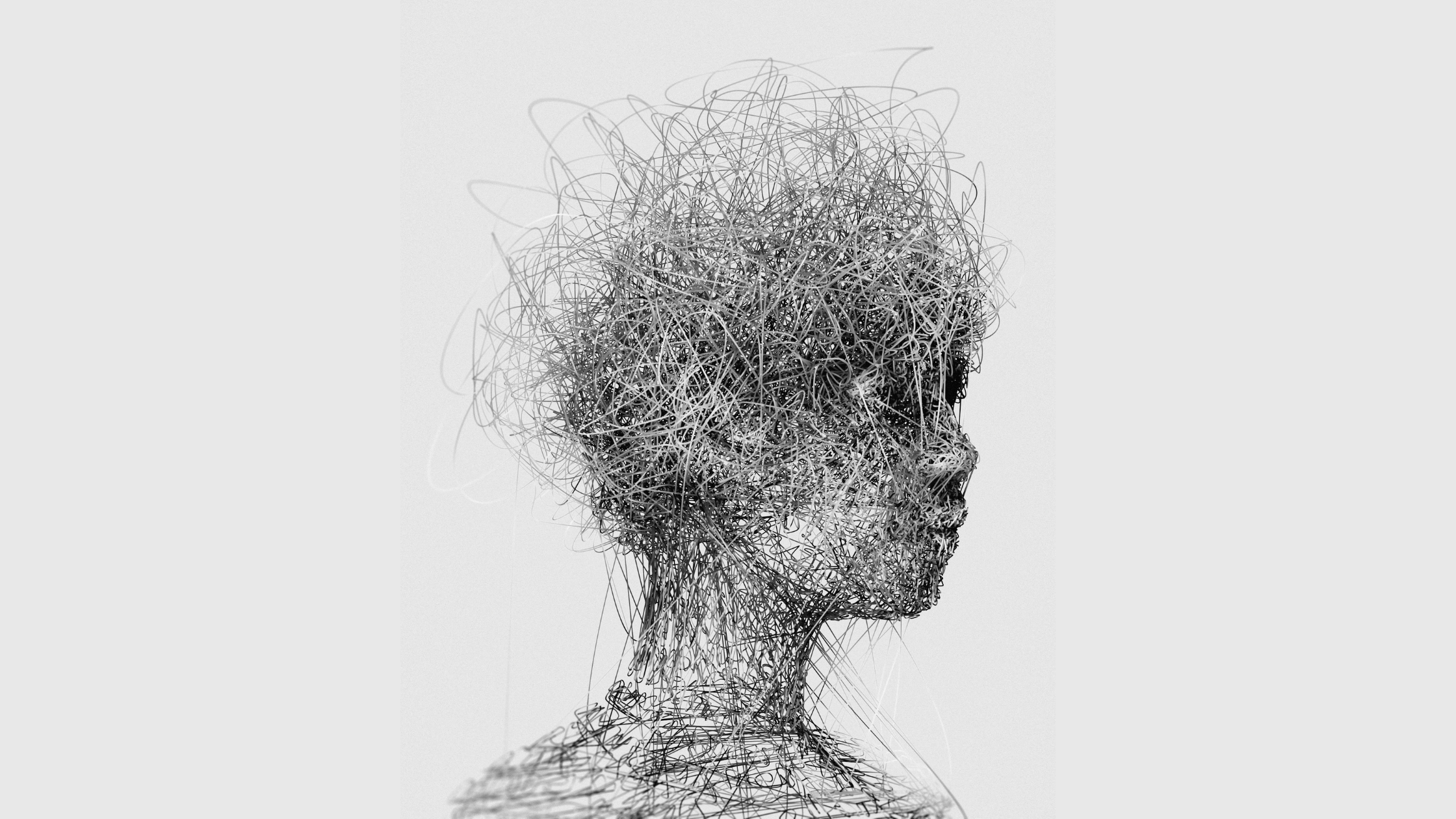
Force Quit: Nervous System
Your nervous system isn't stuck or broken. It's adapted, and it's been paying attention. Here's what it actually is, why quick fixes rarely work for everyone, and ten things that might help….. Might.
I'm a Mac person. When something freezes it's ‘force quit’, close the offending application, and carry on with my day.
Control-alt-delete….. is that still the Windows way? Actually asking, haven’t used one for years.
Either way, we've started talking about people like this. Reset your nervous system. Reboot your body. Restore yourself to factory settings, ideally in time for the weekend.
Thing is….. humans aren't machines. We can't just be reset. And… we don't need to be. Your nervous system isn't broken. It's adapted. Adapted to repeated patterns and repeated information, which is exactly what it was built to do.
So let's talk about what it actually is. Because it's far more interesting than a computer.
What your nervous system actually is
Roughly 86 billion neurons, plus a similar number of other cells supporting them, wired into something that has kept our species alive for hundreds of thousands of years.
There's your central nervous system: brain and spinal cord. The head office. And your peripheral nervous system: everything branching out from it into your skin, muscles, joints and organs, carrying information in both directions constantly.
Part of that peripheral system is somatic (the bits you can consciously direct) and part is autonomic (the bits getting on with it without you: heart rate, digestion, breathing, sweating, pupil size, immune signalling).
The autonomic branch is the one everyone talks about, usually as two settings: sympathetic, often shorthanded as fight or flight, and parasympathetic, rest and digest / feed and breed. That shorthand is useful, but it's also a bit like describing an orchestra as "loud bit, quiet bit". They're not opposites taking turns. They work together, continuously, adjusting you nano second by nano second to whatever is happening or might happen in the future….
It isn't only reacting. Your nervous system is constantly predicting: reading the situation, drawing on everything that's happened to you before (possibly things that have happened to your ancestors through epigenetic’s), and getting your body ready for what it reckons is coming next. Your heart rate starts to lift before you start running, not after. A system trying to keep you one step ahead.
All of which is to say: your nervous system is not a device with a magic button. You and your nervous system are living, learning, and predicting together.
Which is why one quick fix rarely fixes it
Not because (all) the quick fixes are nonsense. Loads of them do something… for some people…some of the time. Some of them are in my list further down.
But if a system is this layered, and it's shaped by your sleep, hormones, immune function, blood sugar, history, relationships, circumstances, the noise in the room, and whether you feel safe with the person in front of you, (plus lots of other things) then the idea that one technique will comprehensively sort it out for all people is well…the maths ain’t mathing.
Think of it less like rebooting a laptop and more like learning a language. Nobody (well…unless you have a didactic memory….then maybe) learns Italian in a weekend workshop. You learn it by repeated exposure over time, and you learn it faster when it's enjoyable and you feel safe making mistakes.
Your nervous system learns the same way. Repetition. Time. Safety. Which is not so Instagramable.
Anxiety, and the world we're actually living in
Anxiety gets treated as a malfunction. It isn't. It's your threat-detection system doing its job: scanning ahead, spotting what might go wrong, mobilising you to deal with it. Useful. Ancient. The reason your ancestors checked the cave BEFORE moving in.
It becomes a problem when it's constant, when it's out of proportion, or when it stops you living.
But there's a version of this conversation that goes straight to "your nervous system is dysregulated" without ever pausing on the obvious question: is there something to be anxious about?
Because, well. Look around. Open the news.
If you feel anxious about the world, your nervous system is not misfiring. It's working. It's correctly identifying that things are frightening. That isn't dysregulation, it's accurate perception.
Adaptation, and the thing that makes change possible
Here's the good bit.
Neuroplasticity is the brain and nervous system's ability to change in response to experience: strengthening some connections, weakening others, reorganising as it goes. We (the ‘royal we’, I mean actual scientists) used to think this mostly stopped in childhood. We were wrong. It carries on across your whole life (it gets a little slower, but doesn’t stop).
Neuroplasticity is neutral, though, and that's the part usually left out of the inspirational graphics. It's not a self-improvement feature. It's just how learning works, and your system learns whatever it gets taught.
Months of pain, stress or fear? Your system gets efficient at pain, stress and fear. It gets quicker at it. More sensitive. Better at spotting threats, because that's what it's been practising, and that's it doing its job properly.
So if you're jumpy, sore, exhausted, or braced all the time, you haven't failed at being a person. You've got a system that learned exactly what it was taught. An alarm that has learned to go off easily isn't a broken alarm. It's a well-trained one.
And the same mechanism runs in the other direction. What gets learned can be un-learned. Slowly, with repetition.
All humans are different humans
Lots of people come to me with *insert a hurty part of the body* and whilst some aspects are similar, they always need slightly different things.
One needs load and movement and permission. One needs their sleep sorting first. One needs to stop being frightened by a scan report. One needs to grieve something. One needs HRT. One needs time and support. Most need some combination we only find by trying and paying attention.
Same with ‘calming’ a nervous system. Cold water is brilliant for some and genuinely miserable for others. Breathwork is grounding for many, and for some people (particularly with a trauma history, or a lot of interoceptive sensitivity) turning attention inwards makes things louder, not quieter. Firm pressure is a relief for one body and a threat to another. Stillness soothes some people and traps others, who need to move.
If it doesn’t work for you, it doesn’t means the technique is rubbish, or you’re broken. It means you're a specific human with a specific history, and specific humans need specific things.
Ten things that might help you feel calmer/regulated
Emphasis firmly on might. This is a menu, not a prescription. Try what you fancy, ignore what you don’t, and please read the line at the end.
Slow your breathing down, especially the out-breath. Slow breathing (under about 10 breaths a minute) measurably shifts autonomic and brain activity, and how people report feeling. No need to be fancy: breathe out for longer than you breathe in.
Get outside, ideally somewhere green or blue. A large UK study found around 120 minutes a week in nature was associated with better health and wellbeing. That's 17 minutes a day, and it doesn't have to be dramatic. Your local park counts.
Move in a way you actually like. Not punishment, not a programme you dread. Walking, swimming, dancing round the kitchen. The best exercise for your nervous system is the one you'll do again next week.
Protect your sleep like it's medicine. Because functionally it is. Poor sleep demonstrably increases pain sensitivity and makes everything else harder. It's not a luxury and it isn't laziness.
Do one thing that used to bring you joy. Not a new aspirational thing. An old one. Deliberately re-introducing rewarding activity is a well-evidenced treatment for low mood in its own right.
Be near a person who feels safe. Or an animal. Or a tree. Co-regulation is real: nervous systems settle near settled nervous systems. This is also why the relationship with a therapist matters as much as the technique.
Use warmth. A bath, a hot water bottle, a heavy blanket, hands on your own skin. Warmth and pressure are the oldest comfort signals we've got, and your system has recognised them since before you had language.
Make a boundary with your phone. Not "quit the news", you're allowed to care about the world. But your system can't sustain full alert indefinitely. Pick when you look. Not first thing, not last thing.
Use rhythm. Singing, humming, drumming, a playlist, walking in time to something. Rhythm is regulating, we've known it since we were rocked as babies, and Dolly would approve.
Say what you're feeling, out loud or on paper. Naming an emotion tends to take some heat out of it. Not analysing it. Just naming it. "I'm frightened" does more than twenty minutes of trying not to be.
BUT if you tried these and they didn't work, there is nothing wrong with you.
Not one of them is a cure. Some will suit you and some won't.
So, will any of this help you?
Maybe.
I know, not the world's greatest sales pitch. But I'd rather be honest than impressive.
If your nervous system has been shouting and you'd like some company while it learns to shout a little less, that's the kind of thing I work with. You can find me in Newhaven or Brighton, or another Jing Method™ therapist in your area.
And if this feels more like life stuff than body stuff, my wife Cloe is a creative counsellor and you can book a free call to see if that's a better fit.
———————————————————
Further reading for the inquisitive and science-minded
Roughly in the order the claims appear.
Slow breathing
Zaccaro, A. et al. (2018). How breath-control can change your life: a systematic review on psycho-physiological correlates of slow breathing. Frontiers in Human Neuroscience, 12:353. Full text What slow breathing does to autonomic activity, brain activity and mood, without the marketing.
Time outside
White, M. P. et al. (2019). Spending at least 120 minutes a week in nature is associated with good health and wellbeing. Scientific Reports, 9:7730. Full text Nearly 20,000 people, and the 120-minute threshold held even for those living in low-greenspace areas.
Doing things you used to enjoy
Ekers, D. et al. (2014). Behavioural activation for depression: an update of meta-analysis of effectiveness and subgroup analysis. PLOS ONE. Full text Open access, and the evidence behind suggestion number 5.
Cuijpers, P., van Straten, A. & Warmerdam, L. (2007). Behavioral activation treatments of depression: a meta-analysis. Clinical Psychology Review. The foundational one on activity scheduling.
Sleep and pain
Schrimpf, M. et al. The effect of sleep deprivation on pain perception in healthy subjects. PMC …a bad night measurably changes how much the same thing hurts.
Why the relationship matters
Flückiger, C. et al. (2018). The alliance in adult psychotherapy: a meta-analytic synthesis. Psychotherapy. PDF 295 studies, 30,000+ patients. The relationship isn't the soft bit around the treatment, it's part of the treatment.
The bigger picture
Butler, D. S. & Moseley, G. L. (2013). Explain Pain (2nd ed.). Noigroup.

Babies don't have kneecaps
Hurty knees and a catastrophising brain are a terrible combination….but (luckily) the story we tell ourselves about our knees is usually scarier than what's actually going on.
Design hiccup:
Babies don't have kneecaps. I mean it. Humans don't develop a patella until somewhere between ages 3 and 5, and before that we've got these little blobs of cartilage just sitting there with potential (Buffy vibes!). Which feels like a fitting start, because knees in general are a bit… unfinished.
They're classified as a modified hinge joint, which sounds straightforward until you look at them properly. Thomas Myers described the knee as 'an elbow designed by committee'. I think of it as the anatomy equivalent of MPs designing SEND reform. Money saving over actual function.
Nearly 1 in 5 adults over 45 in England has knee osteoarthritis. Around half of people over 75 report knee pain. And if you're a woman, you're roughly twice as likely to experience it as a man, with that gap widening as you get older. Knee pain is also one of the most common musculoskeletal complaints GPs see, second only to lower back pain.
The committee's work, everyone……round of applause.
Most of us will have hurty knees at some point. And hurty knees…. like hurty backs… are scary. Because our cautious, catastrophising mind doesn't land on "this might settle down." It goes straight to knee replacement via arthritis. Do not pass go, do not collect £200.
And we're not helping ourselves, culturally. There's so much noise about knees.
Don't run! The impact! The load!
Don't let your knees go over your toes when you squat.
Pain is inevitable, your knees are just falling apart.
And the worst one: bone on bone 😱. Said in the kind of tone that implies your joint is essentially gravel.
There's also the classic, if your knees crack, something is definitely wrong……spoiler….there probably isn’t.
Here's what the evidence actually says:
Running: Recreational runners have lower rates of hip and knee osteoarthritis than non-runners (3.5% vs 10.2% in a 2017 meta-analysis). It's sustained elite-level running that edges the risk up, not a couple of parkruns.
Plus! Roughly 1 in 4 asymptomatic (no pain) knees show osteoarthritis-type features on MRI…meaning osteoarthritis doesn’t necessarily equal pain.
Knees over toes: The original study that launched this fear (Fry et al., 2003) found that stopping the knees travelling forward did reduce knee torque by 22% - but shifted a whopping 1,070% more load into the hips and lower back. So stress is not eliminated, it’s just shifted somewhere else. Plus! To be able to go into a deep squat you generally need the knees to travel forward to maintain balance and achieve full range of motion.
Knee cracking (crepitus): A 2024 meta-analysis found 36% of pain-free people have crepitus. It's associated with some structural changes on MRI but isn't linked to pain, function, or strength. Noisy knees are often just… noisy.
"Bone on bone:" This is a particularly sticky one. Research on patient beliefs has shown that being told you're "bone on bone" reliably leads to fear, avoidance of movement, and worse outcomes; even when it doesn't accurately describe the joint. Again for the people at the back…… what shows up on a knee scan often doesn't match what someone actually feels, plenty of people with 'bad' scans have no pain, and plenty of people with painful knees have unremarkable scans.
Doing everything right….
I'm working with a client right now who is doing everything right. Walks regularly, swims, has just started strength training. And their intermittent knee pain has flared up. Got louder. They're frustrated (understandably) and asking all the questions you'd ask.
Was it the fall a few months ago / has moving differently set it off? Is it the deadlifts? Is it their age? Their hamstrings have always been tight, is it them? And then, quietly: is this it now?
My honest answer to all but the last one is: could be. Any of those things could be contributing. Probably some combination of them. Pain doesn't tend to have a single clean origin story. Unless you’ve been bitten by a radioactive spider ;)
Because pain is complicated. It's an extraordinary mix of the body signalling the brain and the brain interpreting and signalling back. Both responsive, protective and predictive. Our brains are always searching for patterns, and predicting whats going to / is happening…and like Mystic Meg, it doesn’t always get things right.
Our past experiences, our mindset, our fears… they all feed into it. As do hormones, sleep, nutrition, stress. Things we don't always think of as physical.
And then there's the world. We're living in a non-stop information environment, and our nervous systems are absorbing not just our own stress but the stress of everyone around us, and the wider world. The rise of the far right, Gaza, Ukraine, Congo, Iran, the climate crisis, the cost of living. None of that stays outside our minds and bodies. All of it turns up the dial on our nervous systems. And a system that's already overwhelmed is going to be a more sensitive one.
Even if you're doing everything right: eating the protein, exercising, sleeping 8 hours, meditating, taking time for yourself… sometimes things still hurt. And sometimes there isn't a clean narrative: I did this thing, it caused that thing, I will heal in this amount of time. Sometimes it's messier than that.
Pain isn't a failing.
Sometimes it gets better on its own. Sometimes it feels endless, and that's the hardest bit. Sometimes you need support to help you understand what's going on and figure out what might actually help…. to look at the whole picture, not just the joint.
If your knees are talking to you and you're not sure what they're saying, that's exactly the kind of thing I work with. You can find me in Newhaven or Brighton or another Jing Method™ therapist in your area.
And if you think honestly this feels more like life stuff than knee stuff - my wife Cloe is a creative counsellor and you can book a free call to see if that’s a better fit.
———————————————————
Further reading for the inquisitive and science-minded
A short list, roughly in the order the claims appear above. All peer-reviewed unless stated.
How knees (and kneecaps) actually develop
Ostrowski-Coste, H. et al. (2016). The age of patella ossification. European Society of Musculoskeletal Radiology poster. epos.myesr.org - an accessible summary of when patellae turn from cartilage to bone, with the interesting detail that girls ossify earlier than boys.
Epidemiology of knee pain and osteoarthritis in the UK
Swain, S. et al. (2020). Trends in incidence and prevalence of osteoarthritis in the UK: findings from the Clinical Practice Research Datalink. Osteoarthritis and Cartilage. ScienceDirect - the source of the "1 in 5 over 45" figure for England.
Swain, S. et al. (2023). Healthcare utilisation and mortality in people with osteoarthritis in the UK. British Journal of General Practice. BJGP - treatment-seeking patterns, including the 75-and-over data.
Srikanth, V. K. et al. (2005). A meta-analysis of sex differences in prevalence, incidence and severity of osteoarthritis. Osteoarthritis and Cartilage. PubMed - one of the foundational papers on the women-vs-men (as assigned at birth) gap.
Hame, S. L. & Alexander, R. A. (2013). Knee osteoarthritis in women. Current Reviews in Musculoskeletal Medicine - useful companion piece on why the gap exists (anatomy, hormones, muscle mass, ACL injury rates).
Mansfield, M. et al. (2022). The prevalence of musculoskeletal presentations in general practice. British Journal of General Practice Open. PubMed- where the "second most common MSK presentation" figure comes from.
Myths that scare people about their knees
Alentorn-Geli, E. et al. (2017). The association of recreational and competitive running with hip and knee osteoarthritis: a systematic review and meta-analysis. JOSPT. PubMed | Full text - the big one on running and OA.
Bonus: the accompanying JOSPT editorial "Running is not bad for your knees" is a short, readable summary.
Fry, A. C., Smith, J. C. & Schilling, B. K. (2003). Effect of knee position on hip and knee torques during the barbell squat. Journal of Strength and Conditioning Research - the "knees over toes" study. The full text lives behind a paywall, but this biomechanics breakdown summarises it faithfully.
de Oliveira Silva, D. et al. (2018). Implications of knee crepitus to the overall clinical presentation of women with and without patellofemoral pain.PubMed. - noisy knees
Robertson, C. J. et al. (2024). Noisy knees - knee crepitus prevalence and association with structural pathology: a systematic review and meta-analysis. British Journal of Sports Medicine. PubMed - the most up-to-date on noisy knees
Barker-Davies, R. M. et al. (2020). Misconceptions and the acceptance of evidence-based nonsurgical interventions for knee osteoarthritis: a qualitative study. Clinical Orthopaedics and Related Research. PMC - includes the finding that every participant in one qualitative study had absorbed the "bone on bone" framing.
Bedson, J. & Croft, P. R. (2008). The discordance between clinical and radiographic knee osteoarthritis: a systematic search and summary of the literature. BMC Musculoskeletal Disorders. PMC - the classic on "what a knee scan shows is not what a knee feels."
Pain is more than tissue damage
Moseley, G. L. & Butler, D. S. (2015). Fifteen years of explaining pain: the past, present, and future. Journal of Pain. PDF - a state-of-the-science summary from the two people who popularised pain neuroscience education for patients.
Nijs, J. et al. (2023). The biology of chronic pain and its implications for pain neuroscience education: state of the art. Journal of Clinical Medicine. PMC - a recent, readable overview of the biopsychosocial model.
Gatchel, R. J. et al. (2007). The biopsychosocial approach to chronic pain: scientific advances and future directions. Psychological Bulletin. PubMed - the foundational review.
Sleep, stress and how the world turns the volume up
Schrimpf, M. et al. Total sleep deprivation increases pain sensitivity, impairs conditioned pain modulation and facilitates temporal summation of pain in healthy participants.PMC - a night of bad sleep demonstrably changes how painful the same stimulus feels.
Nijs, J. et al. (2017). Sleep disturbances and severe stress as glial activators: key targets for treating central sensitisation in chronic pain patients? Expert Opinion on Therapeutic Targets. PubMed - the mechanism: stress and poor sleep ramp up the nervous system's sensitivity.
Haack, M. et al. (2020). Sleep deficiency and chronic pain: potential underlying mechanisms and clinical implications. Neuropsychopharmacology - good further reading on why protecting sleep may be as important as any exercise protocol.
A book recommendation if you prefer a paperback
Butler, D. S. & Moseley, G. L. (2013). Explain Pain (2nd ed.). Noigroup Publications. Written for non-specialists. The whole "pain is an output of the brain" story, delivered with pretty pictures.