
Painfully Honest
Ingredients: A generous helping of evidence-informed writing on pain, bodies and the wellness world - a dash of swearing, a sprinkling of sarcasm, and a lot of heart.
Free from: artificial sweeteners, miracle cures, and wellness waffle.
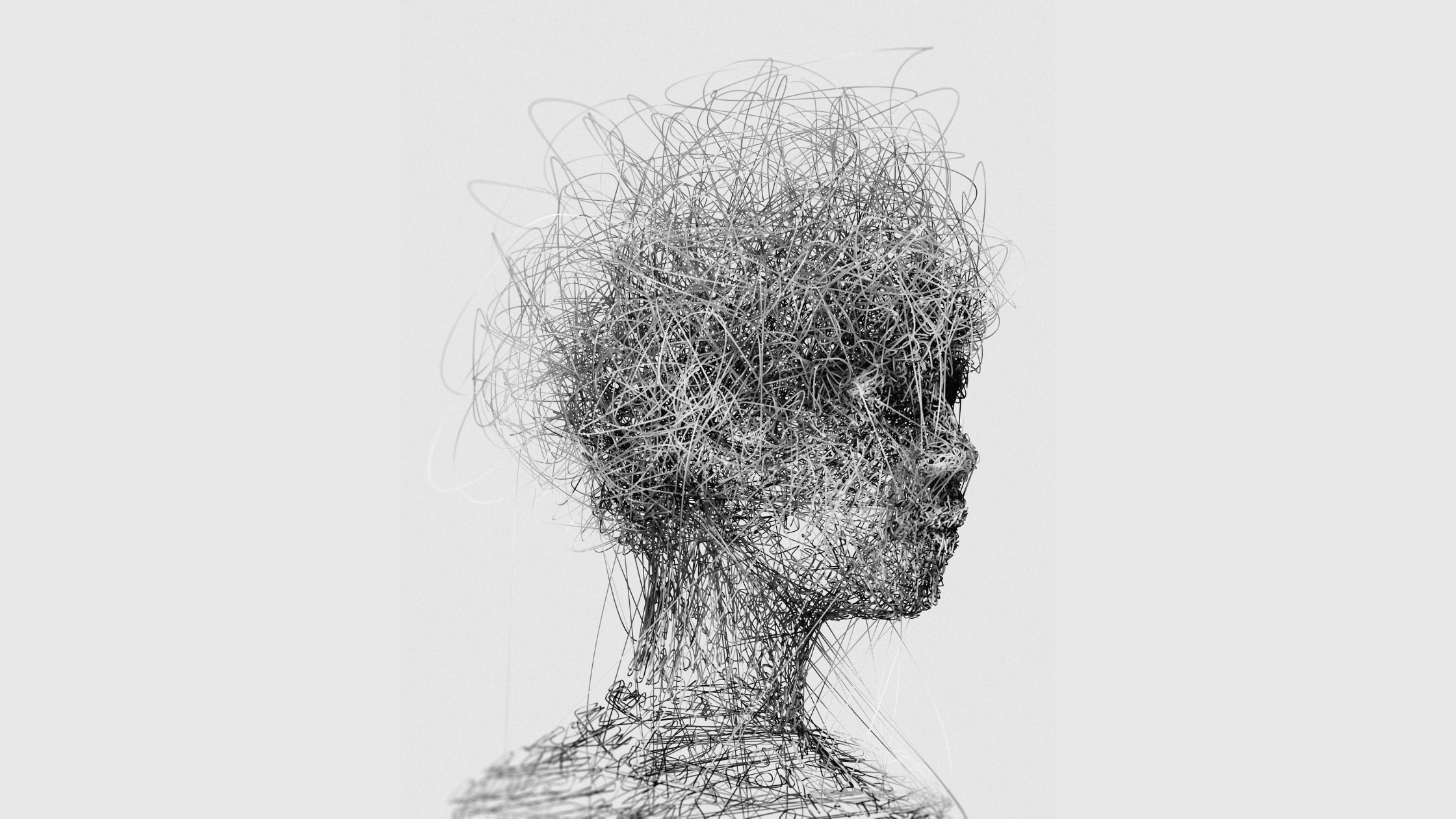
Force Quit: Nervous System
Your nervous system isn't stuck or broken. It's adapted, and it's been paying attention. Here's what it actually is, why quick fixes rarely work for everyone, and ten things that might help….. Might.
I'm a Mac person. When something freezes it's ‘force quit’, close the offending application, and carry on with my day.
Control-alt-delete….. is that still the Windows way? Actually asking, haven’t used one for years.
Either way, we've started talking about people like this. Reset your nervous system. Reboot your body. Restore yourself to factory settings, ideally in time for the weekend.
Thing is….. humans aren't machines. We can't just be reset. And… we don't need to be. Your nervous system isn't broken. It's adapted. Adapted to repeated patterns and repeated information, which is exactly what it was built to do.
So let's talk about what it actually is. Because it's far more interesting than a computer.
What your nervous system actually is
Roughly 86 billion neurons, plus a similar number of other cells supporting them, wired into something that has kept our species alive for hundreds of thousands of years.
There's your central nervous system: brain and spinal cord. The head office. And your peripheral nervous system: everything branching out from it into your skin, muscles, joints and organs, carrying information in both directions constantly.
Part of that peripheral system is somatic (the bits you can consciously direct) and part is autonomic (the bits getting on with it without you: heart rate, digestion, breathing, sweating, pupil size, immune signalling).
The autonomic branch is the one everyone talks about, usually as two settings: sympathetic, often shorthanded as fight or flight, and parasympathetic, rest and digest / feed and breed. That shorthand is useful, but it's also a bit like describing an orchestra as "loud bit, quiet bit". They're not opposites taking turns. They work together, continuously, adjusting you nano second by nano second to whatever is happening or might happen in the future….
It isn't only reacting. Your nervous system is constantly predicting: reading the situation, drawing on everything that's happened to you before (possibly things that have happened to your ancestors through epigenetic’s), and getting your body ready for what it reckons is coming next. Your heart rate starts to lift before you start running, not after. A system trying to keep you one step ahead.
All of which is to say: your nervous system is not a device with a magic button. You and your nervous system are living, learning, and predicting together.
Which is why one quick fix rarely fixes it
Not because (all) the quick fixes are nonsense. Loads of them do something… for some people…some of the time. Some of them are in my list further down.
But if a system is this layered, and it's shaped by your sleep, hormones, immune function, blood sugar, history, relationships, circumstances, the noise in the room, and whether you feel safe with the person in front of you, (plus lots of other things) then the idea that one technique will comprehensively sort it out for all people is well…the maths ain’t mathing.
Think of it less like rebooting a laptop and more like learning a language. Nobody (well…unless you have a didactic memory….then maybe) learns Italian in a weekend workshop. You learn it by repeated exposure over time, and you learn it faster when it's enjoyable and you feel safe making mistakes.
Your nervous system learns the same way. Repetition. Time. Safety. Which is not so Instagramable.
Anxiety, and the world we're actually living in
Anxiety gets treated as a malfunction. It isn't. It's your threat-detection system doing its job: scanning ahead, spotting what might go wrong, mobilising you to deal with it. Useful. Ancient. The reason your ancestors checked the cave BEFORE moving in.
It becomes a problem when it's constant, when it's out of proportion, or when it stops you living.
But there's a version of this conversation that goes straight to "your nervous system is dysregulated" without ever pausing on the obvious question: is there something to be anxious about?
Because, well. Look around. Open the news.
If you feel anxious about the world, your nervous system is not misfiring. It's working. It's correctly identifying that things are frightening. That isn't dysregulation, it's accurate perception.
Adaptation, and the thing that makes change possible
Here's the good bit.
Neuroplasticity is the brain and nervous system's ability to change in response to experience: strengthening some connections, weakening others, reorganising as it goes. We (the ‘royal we’, I mean actual scientists) used to think this mostly stopped in childhood. We were wrong. It carries on across your whole life (it gets a little slower, but doesn’t stop).
Neuroplasticity is neutral, though, and that's the part usually left out of the inspirational graphics. It's not a self-improvement feature. It's just how learning works, and your system learns whatever it gets taught.
Months of pain, stress or fear? Your system gets efficient at pain, stress and fear. It gets quicker at it. More sensitive. Better at spotting threats, because that's what it's been practising, and that's it doing its job properly.
So if you're jumpy, sore, exhausted, or braced all the time, you haven't failed at being a person. You've got a system that learned exactly what it was taught. An alarm that has learned to go off easily isn't a broken alarm. It's a well-trained one.
And the same mechanism runs in the other direction. What gets learned can be un-learned. Slowly, with repetition.
All humans are different humans
Lots of people come to me with *insert a hurty part of the body* and whilst some aspects are similar, they always need slightly different things.
One needs load and movement and permission. One needs their sleep sorting first. One needs to stop being frightened by a scan report. One needs to grieve something. One needs HRT. One needs time and support. Most need some combination we only find by trying and paying attention.
Same with ‘calming’ a nervous system. Cold water is brilliant for some and genuinely miserable for others. Breathwork is grounding for many, and for some people (particularly with a trauma history, or a lot of interoceptive sensitivity) turning attention inwards makes things louder, not quieter. Firm pressure is a relief for one body and a threat to another. Stillness soothes some people and traps others, who need to move.
If it doesn’t work for you, it doesn’t means the technique is rubbish, or you’re broken. It means you're a specific human with a specific history, and specific humans need specific things.
Ten things that might help you feel calmer/regulated
Emphasis firmly on might. This is a menu, not a prescription. Try what you fancy, ignore what you don’t, and please read the line at the end.
Slow your breathing down, especially the out-breath. Slow breathing (under about 10 breaths a minute) measurably shifts autonomic and brain activity, and how people report feeling. No need to be fancy: breathe out for longer than you breathe in.
Get outside, ideally somewhere green or blue. A large UK study found around 120 minutes a week in nature was associated with better health and wellbeing. That's 17 minutes a day, and it doesn't have to be dramatic. Your local park counts.
Move in a way you actually like. Not punishment, not a programme you dread. Walking, swimming, dancing round the kitchen. The best exercise for your nervous system is the one you'll do again next week.
Protect your sleep like it's medicine. Because functionally it is. Poor sleep demonstrably increases pain sensitivity and makes everything else harder. It's not a luxury and it isn't laziness.
Do one thing that used to bring you joy. Not a new aspirational thing. An old one. Deliberately re-introducing rewarding activity is a well-evidenced treatment for low mood in its own right.
Be near a person who feels safe. Or an animal. Or a tree. Co-regulation is real: nervous systems settle near settled nervous systems. This is also why the relationship with a therapist matters as much as the technique.
Use warmth. A bath, a hot water bottle, a heavy blanket, hands on your own skin. Warmth and pressure are the oldest comfort signals we've got, and your system has recognised them since before you had language.
Make a boundary with your phone. Not "quit the news", you're allowed to care about the world. But your system can't sustain full alert indefinitely. Pick when you look. Not first thing, not last thing.
Use rhythm. Singing, humming, drumming, a playlist, walking in time to something. Rhythm is regulating, we've known it since we were rocked as babies, and Dolly would approve.
Say what you're feeling, out loud or on paper. Naming an emotion tends to take some heat out of it. Not analysing it. Just naming it. "I'm frightened" does more than twenty minutes of trying not to be.
BUT if you tried these and they didn't work, there is nothing wrong with you.
Not one of them is a cure. Some will suit you and some won't.
So, will any of this help you?
Maybe.
I know, not the world's greatest sales pitch. But I'd rather be honest than impressive.
If your nervous system has been shouting and you'd like some company while it learns to shout a little less, that's the kind of thing I work with. You can find me in Newhaven or Brighton, or another Jing Method™ therapist in your area.
And if this feels more like life stuff than body stuff, my wife Cloe is a creative counsellor and you can book a free call to see if that's a better fit.
———————————————————
Further reading for the inquisitive and science-minded
Roughly in the order the claims appear.
Slow breathing
Zaccaro, A. et al. (2018). How breath-control can change your life: a systematic review on psycho-physiological correlates of slow breathing. Frontiers in Human Neuroscience, 12:353. Full text What slow breathing does to autonomic activity, brain activity and mood, without the marketing.
Time outside
White, M. P. et al. (2019). Spending at least 120 minutes a week in nature is associated with good health and wellbeing. Scientific Reports, 9:7730. Full text Nearly 20,000 people, and the 120-minute threshold held even for those living in low-greenspace areas.
Doing things you used to enjoy
Ekers, D. et al. (2014). Behavioural activation for depression: an update of meta-analysis of effectiveness and subgroup analysis. PLOS ONE. Full text Open access, and the evidence behind suggestion number 5.
Cuijpers, P., van Straten, A. & Warmerdam, L. (2007). Behavioral activation treatments of depression: a meta-analysis. Clinical Psychology Review. The foundational one on activity scheduling.
Sleep and pain
Schrimpf, M. et al. The effect of sleep deprivation on pain perception in healthy subjects. PMC …a bad night measurably changes how much the same thing hurts.
Why the relationship matters
Flückiger, C. et al. (2018). The alliance in adult psychotherapy: a meta-analytic synthesis. Psychotherapy. PDF 295 studies, 30,000+ patients. The relationship isn't the soft bit around the treatment, it's part of the treatment.
The bigger picture
Butler, D. S. & Moseley, G. L. (2013). Explain Pain (2nd ed.). Noigroup.